At Umora, we make sweaters, T-shirts, caps and kidswear for brands and export houses. But some of our most rewarding days are spent far away from the knitting machines — in classrooms, with the people who will build India’s next businesses. Saturday, 10 October 2026 was one of those days.
An invitation from SIES
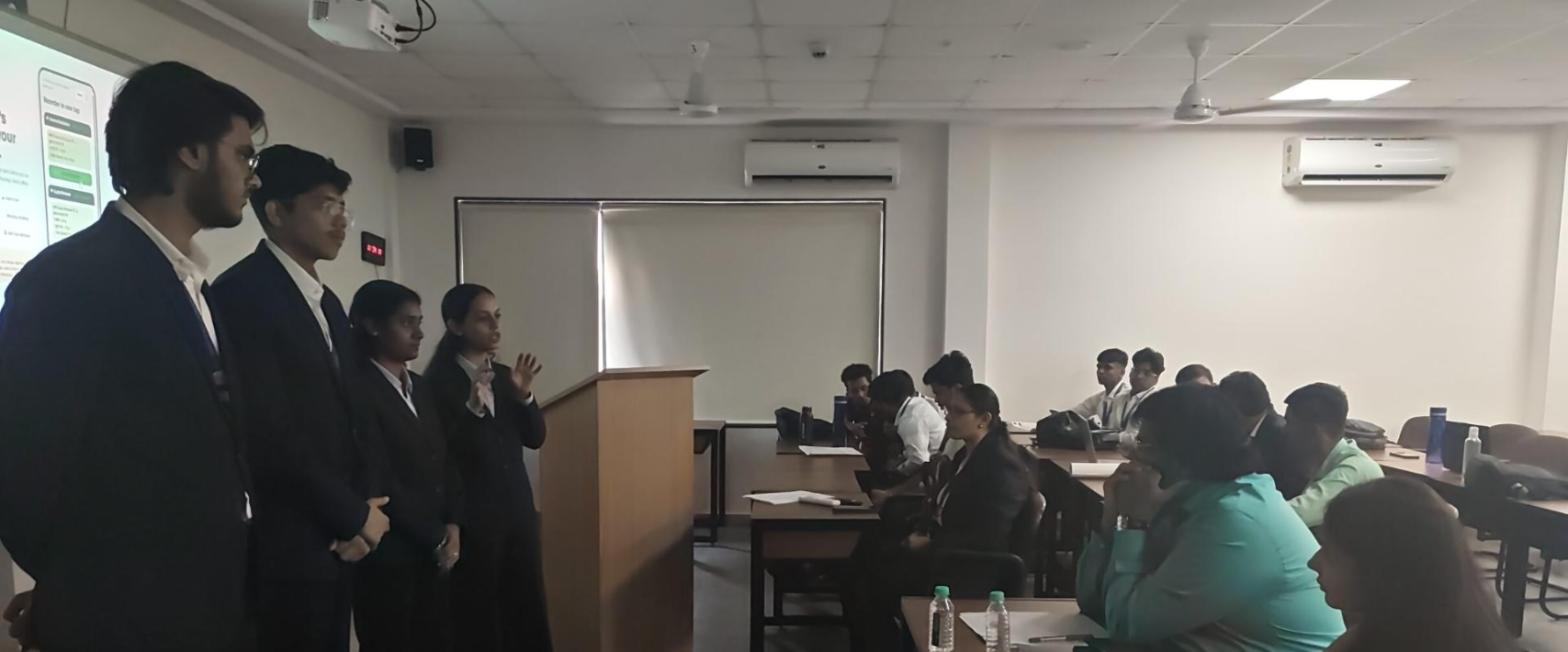
Our co-founder Sarthak Dayama and Sapna Pandey from our Founder’s Office were on the judging panel of Pitch Arena 2026–27 at SIES College of Management Studies, Nerul. The competition was part of the college’s MCA Entrepreneurship Expo, run with its Internal Quality Assurance Cell (IQAC) and the Institution’s Innovation Council. Eight student teams, one classroom, 10 am to 4 pm.
Why a manufacturer spends Saturdays on campus
Sarthak is a fourth-generation textile entrepreneur. He teaches Advanced Knitting as visiting faculty at NIFT Mumbai and regularly sits on juries and panels at management colleges. For us, this isn’t a side activity. The students we meet today are tomorrow’s founders, brand owners, buyers and colleagues. Time with them keeps us curious, and it is how we meet people who want to build things.
First, put the room at ease
Nervous founders pitch worse than they think, so Sarthak began by taking the pressure off. If a blazer made anyone stiff, they could take it off. If they needed water or a minute to freshen up, they should go. “Just relax and tell us your idea: what problem it solves, and how you will keep the business alive, with or without funding.”
He told them exactly how they would be judged: not on their English or their polish, but on how clearly they could turn an idea into a business model. And he gave a fair warning. “This is a classroom competition, but I will still ask you some really difficult questions. There may be brain-freeze moments or complete silence. Face them anyway. One day you will be at a hackathon or in front of an incubator, and you’ll be glad you’ve done this before.”
Eight ideas from everyday life
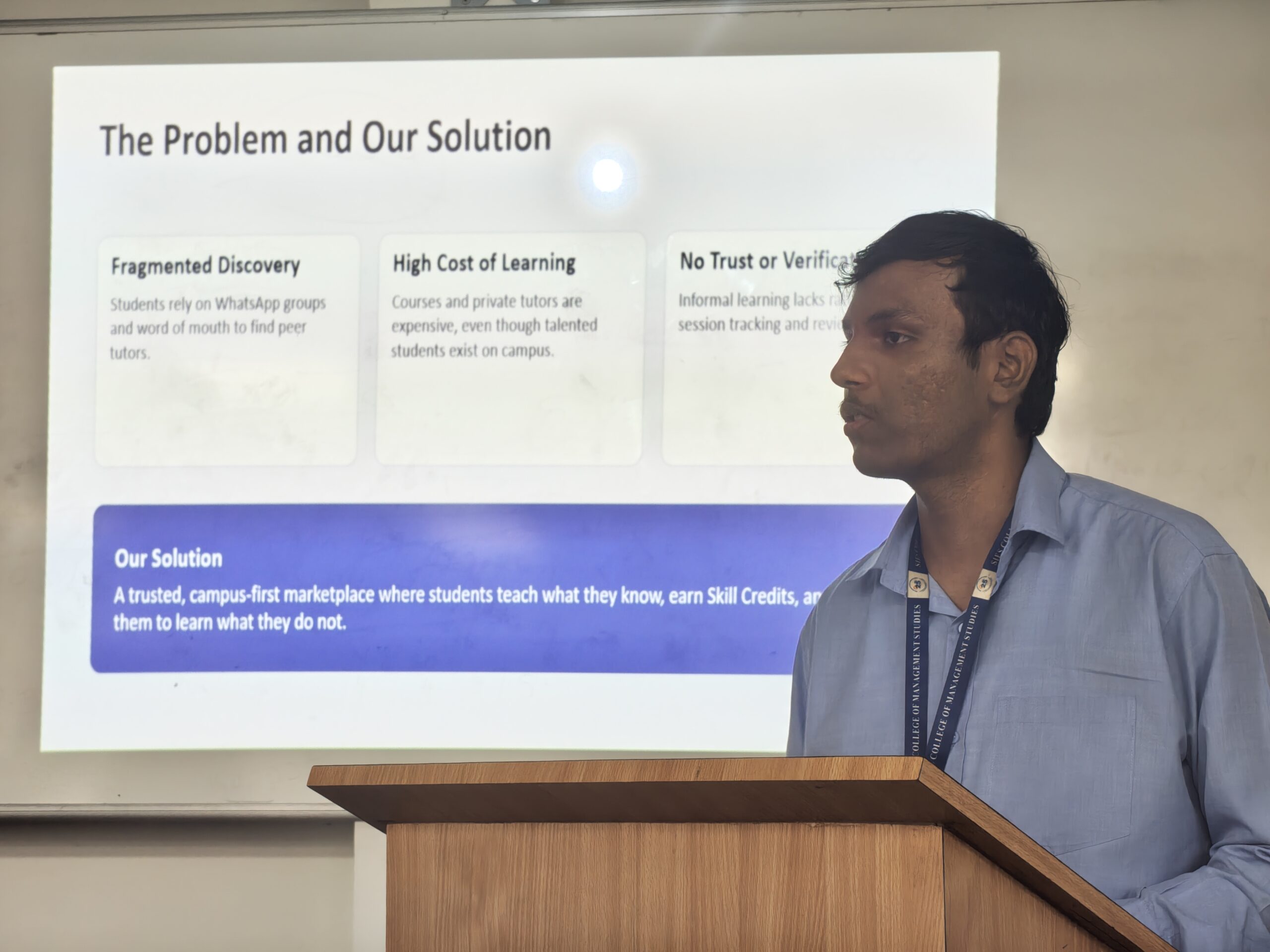
- StockSaathi — stock tracking for kirana stores, in the shopkeeper’s own language
- Smart Canteen — pre-ordering for college and office canteens
- Elysian Wedlock — one platform to plan a wedding and book its vendors
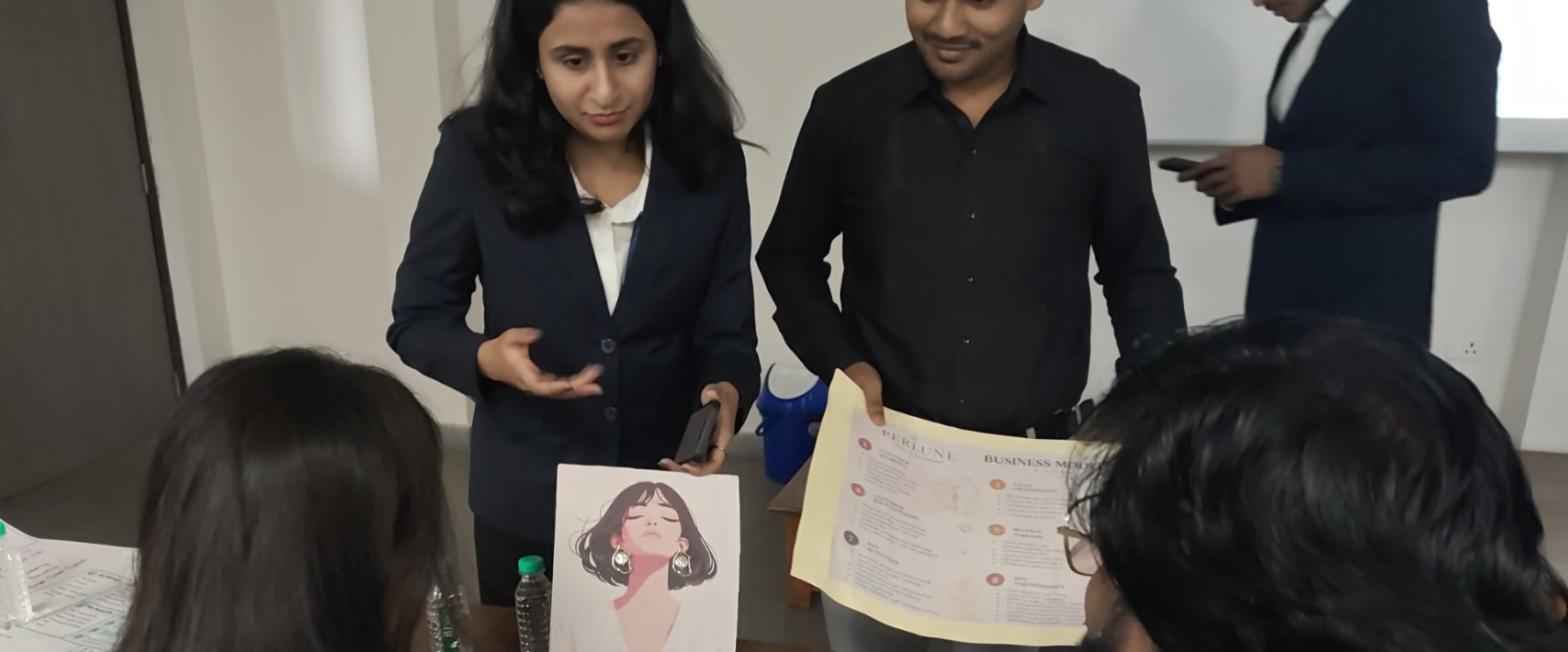
- Perlune — minimalist pearl jewellery, as an answer to rising gold and silver prices
- PC Forge — helping buyers choose and build the right custom PC
- Adhyaay — finding verified teachers and home tutors
- SkillXchange — students teaching each other what they know
- QueLess — digital queue tokens: businesses subscribe, customers queue free
The questions that made the room go quiet
Who is your user, really? In a kirana store, the owner is also the manager, the cashier and the stock boy. Will he open a dashboard on a busy evening? Design for the one person who actually runs the shop.
Does it need one more app? Who pays for Smart Canteen — the college, the office or the canteen owner? Will a student download an app just to order a samosa? Signing people in with a mobile number instead of an email ID makes an idea far easier to use.
Trust is the product. What happens when a wedding vendor spoils a family’s big day, and whose name gets hurt? Will vendors accept a 20% commission? For home tutors, how do you handle police background checks — and what stops a tutor and a parent from going offline after the free trial?
Do the maths. What is the average order value? Are pearls an everyday buy or an occasional luxury? Make in-house or outsource? And if your competition is Amazon, Flipkart and the brands’ own stores, what extra value does the customer get?
There were long pauses and some nervous laughter. Then, team after team, a student would take a breath and start reasoning out loud. That was the whole point.
The big lesson: not everything needs an app or AI
If one idea ran through the whole day, it was this. The best solution is often the one that asks the least effort from the user while giving them more value: a missed call instead of a sign-up form, a token number instead of a login, a simple checklist instead of a dashboard.
Ask “what is the easiest thing my customer will actually do every day?” before “what technology can I use?”. If that simple thing works and can be repeated at scale, it builds habits. Habits bring in partners, and partners build an ecosystem. That is how a value-driven business is made — with or without a fancy tech stack.
It is the same way we work at Umora. Most of what our customers value — honest timelines, the right fabric, a finish that holds up — comes from getting simple things right, every single time.
“What does a Founder’s Office actually do?”
During the breaks, that was the question Sapna heard most. Some of the students have already been placed with start-ups and wanted to know what that life is really like. Her answer: you sit next to the problems the founder hasn’t solved yet, and you help solve them — people, partnerships, operations, whatever the week needs.
Sarthak’s advice was just as direct: go and work in a start-up. The learning curve is crazy. You will learn far beyond your KRAs, in ways no course can teach you.
How the day ended
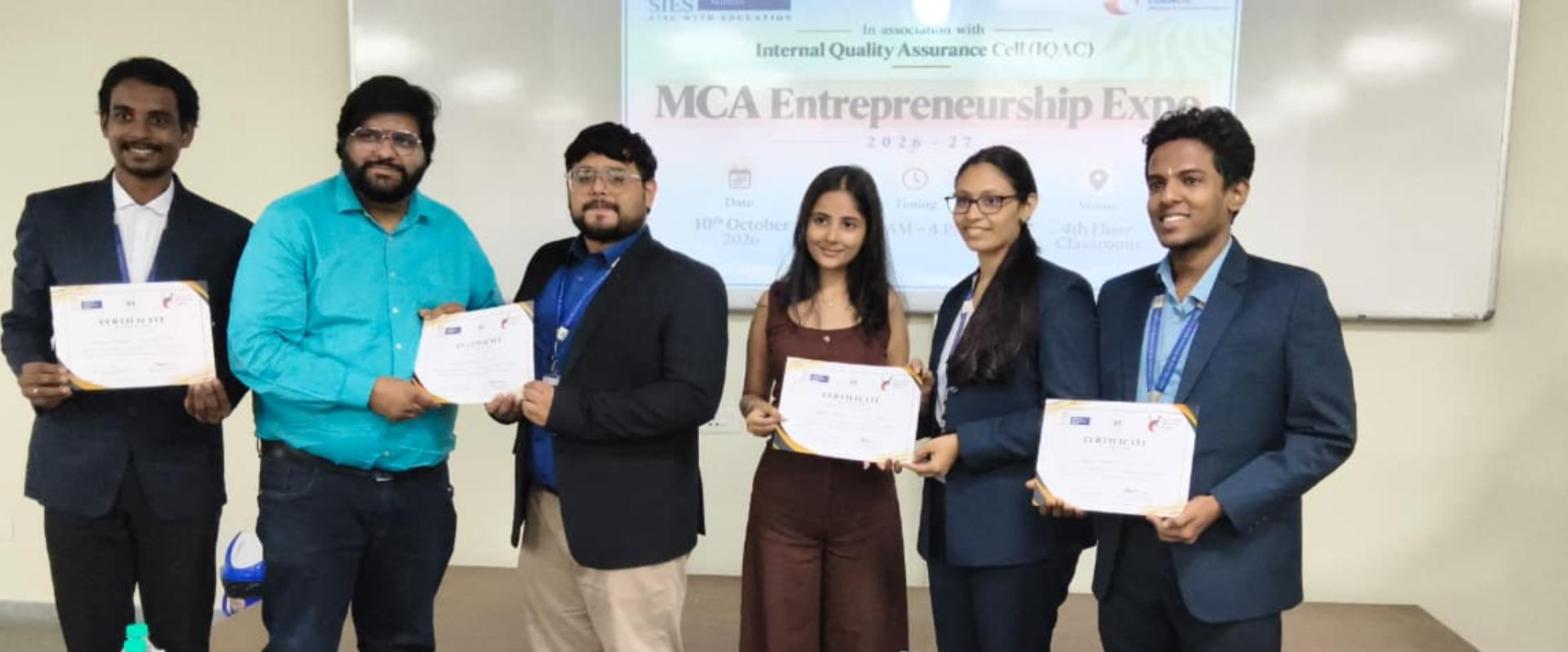
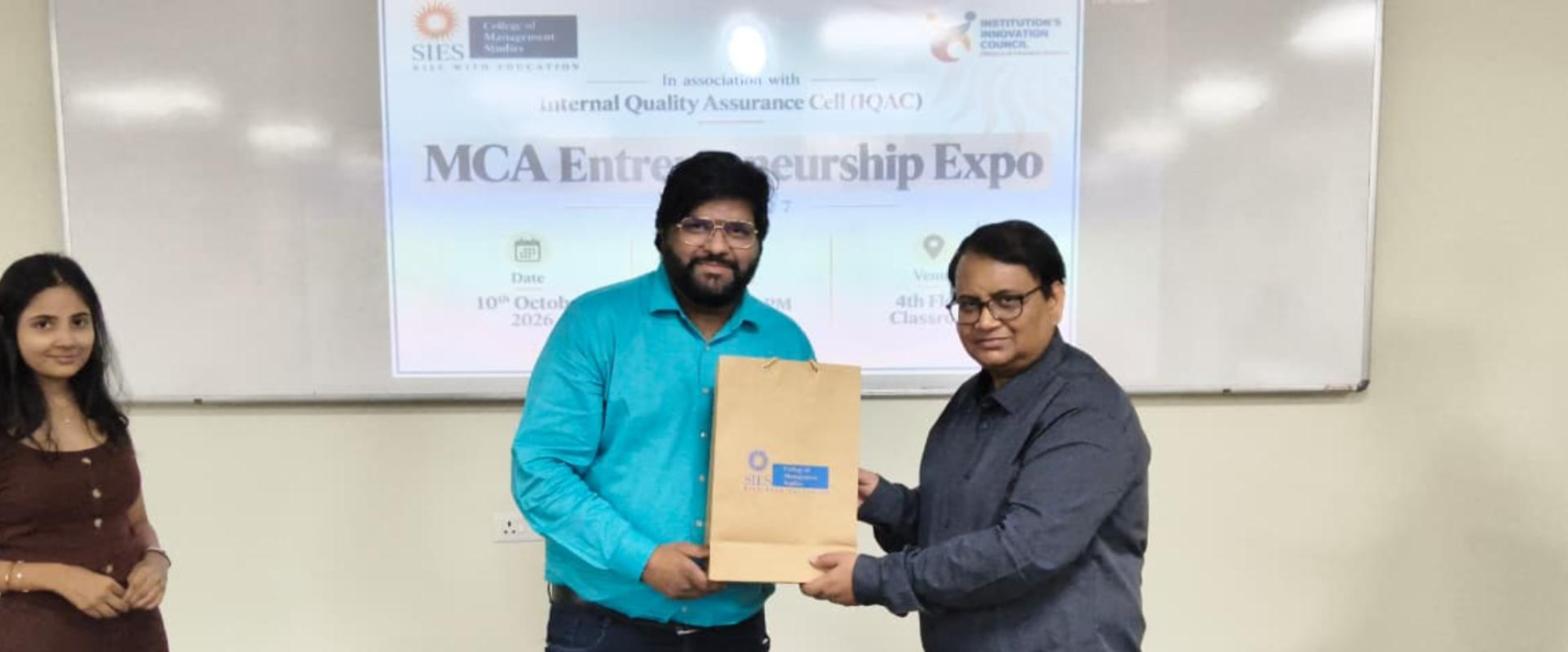
The winning teams received their certificates from the panel. Event Director Prof. Pankaj Srivastava felicitated the panelists, and the panel was then taken for a wonderful lunch on campus. Thank you to SIES College of Management Studies, the IQAC, the Institution’s Innovation Council and every student who stood up and pitched.
Want to build things with us?
At Umora, interns and new joiners don’t get a list of chores. They get a clear Point A and Point B, real problems to solve, and a direct line to the founders. We try new things, we sometimes fail, and we celebrate the attempt — because that is how people grow.
If that sounds like you, start at our Careers page. And if you are a student who needs career advice, write to Sarthak on LinkedIn — he is happy to guide you.
Internships and careers at Umora. Meet our alumni and apply →